


 3228B Wade Hampton Blvd, Taylors, SC 29687
 (864) 300-4737



By using our website, you agree to the use of cookies as described in our Cookie Policy
Back to Blog
‹ Back
Hot Water Running Out Too Fast Your Greer Home?
Most homeowners think hot water is just about tank size. Gallons in, gallons out. But your system sees more than that — and if you don't, you're asking for cold showers. A water heater may look fine from the outside, but it leaves clues when something's wrong. Especially if you're draining the tank faster than it can recover or ignoring maintenance that keeps it running strong.
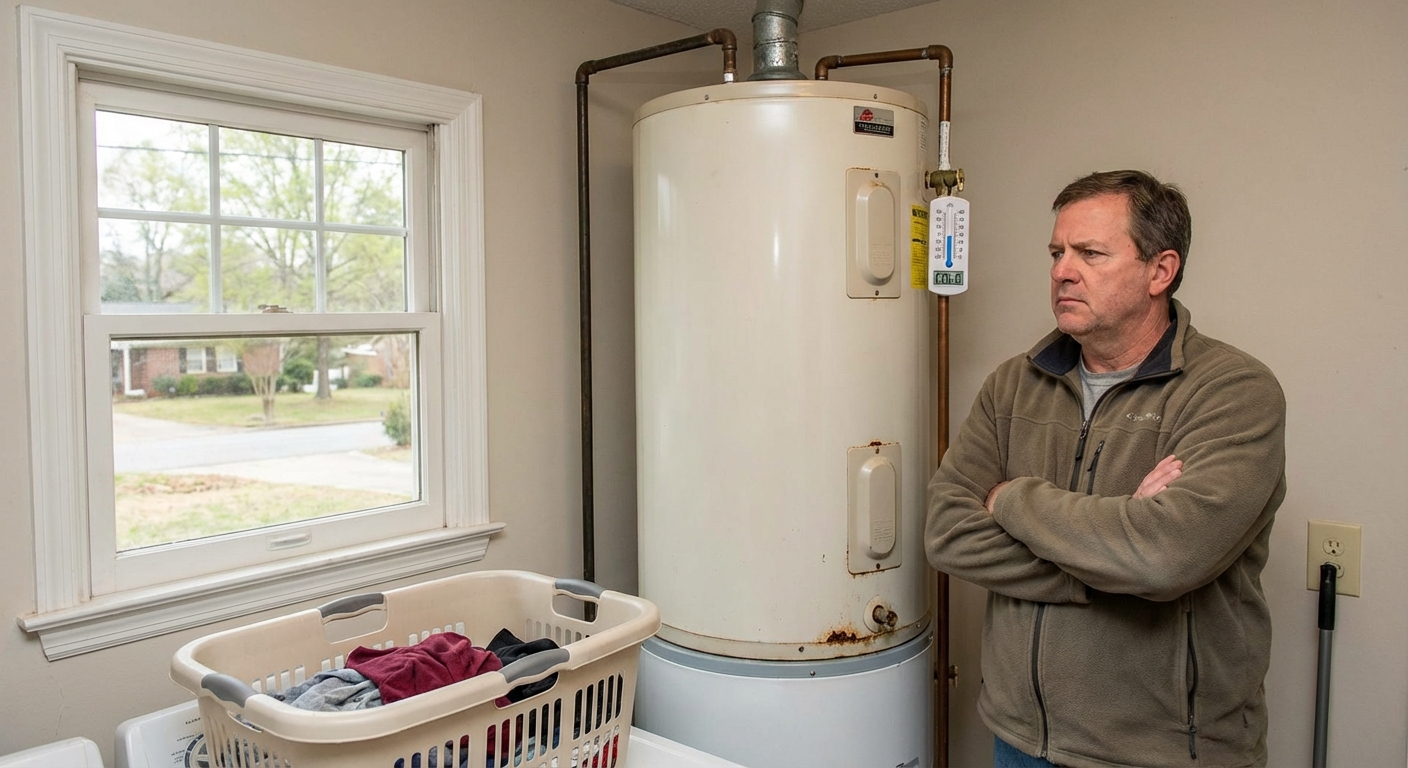
So here's the reality. If you're relying on hot water to keep your household moving, that's normal. Just don't treat your heater like it's invincible. Every degree drop should raise a question. Every cold burst needs investigation. And every repair decision should be grounded in what's actually failing — not just what you hope will fix itself.
Your Tank Might Be Too Small for the Job
We see this constantly in Greer homes. Families grow, appliances multiply, and suddenly the 40-gallon tank that worked five years ago can't keep up. You're not using more water because you're wasteful — you're using more because your household demands it. That's not a problem. That's just math.
If you've added a teenager, installed a new dishwasher, or upgraded to a rainfall showerhead, your hot water needs have changed. The heater hasn't. And when demand outpaces capacity, you're going to feel it. Fast.
- A 40-gallon tank serves two people comfortably, maybe three if usage is staggered
- Families of four or more typically need 50 gallons minimum
- High-efficiency appliances don't always mean lower water usage — some use more per cycle
- Tankless systems eliminate size limits but require proper installation and flow rates
- If you're running out mid-shower, your recovery rate isn't matching your draw rate
Sediment Turns Your Tank Into a Smaller Tank
Greer's water isn't the hardest in South Carolina, but it's not soft either. Minerals settle. They accumulate. And over time, they steal space at the bottom of your tank that should be holding hot water. That sediment layer also insulates the water from the heating element, forcing your system to work harder and heat less.
You won't see this happening. But you'll hear it — popping, rumbling, or banging sounds when the heater fires up. That's water trying to boil underneath a layer of calcium and magnesium. It's inefficient. It's loud. And it's fixable.
- Sediment reduces effective tank capacity by several gallons
- It forces longer heating cycles and higher energy bills
- Flushing the tank annually prevents most buildup
- Older tanks with years of neglect may need professional cleaning or replacement
- If the water comes out rusty or discolored, sediment isn't your only problem
Heating Elements Fail Without Warning
Electric water heaters rely on two heating elements — one at the top, one at the bottom. When the lower element dies, you lose half your heating power. The top half of the tank still gets warm, but it drains fast. And once it's gone, the cold water rushing in doesn't get heated at all.
This is one of the most common causes of sudden hot water loss, and it's also one of the easiest to miss. The heater still runs. The breaker doesn't trip. Everything looks normal until you're standing in a cold shower wondering what happened.
- Lower element failure cuts your hot water supply in half
- Upper element failure means no hot water at all
- Testing elements requires a multimeter and basic electrical knowledge
- Replacement elements are inexpensive, but installation matters
- If both elements are old, replace them together to avoid a repeat call
Thermostats Lie When They Break
Your water heater's thermostat controls when the elements fire and how hot the water gets. If it's set too low, you'll run out of hot water quickly because the tank never reaches full temperature. If it's malfunctioning, it might not signal the elements to heat at all — or it might shut them off too early.
The standard setting is 120 degrees. Anything lower feels lukewarm fast. Anything higher risks scalding and wastes energy. But if the thermostat itself is broken, the setting doesn't matter. The heater won't respond correctly no matter what the dial says.
- Check the thermostat setting before assuming it's broken
- If the setting is correct but water isn't hot enough, test the thermostat
- Faulty thermostats can cause short cycling or no heating at all
- Replacement is straightforward but requires shutting off power first
- Some units have two thermostats — one for each element
Dip Tubes Crack and Ruin Everything
The dip tube is a plastic pipe inside your tank that directs incoming cold water to the bottom, where it gets heated. When that tube cracks or disintegrates, cold water mixes with hot water at the top of the tank. You end up with lukewarm water almost immediately, even if the heater is working perfectly.
This is especially common in older units where the plastic has degraded. You won't see it from the outside. But you'll feel it every time you turn on the tap. And if you're finding small plastic fragments in your faucet aerators, that's your smoking gun.
- A broken dip tube causes instant temperature drops
- Cold water mixing at the top means no stratification
- Replacement tubes are cheap and widely available
- Installation requires draining the tank and removing the cold water inlet
- If the tube is disintegrating, check for debris in your fixtures
When to Stop Guessing and Call Someone
If you've checked the basics and you're still losing hot water too fast, it's time to bring in a professional. We help homeowners in Greer diagnose these issues quickly and fix them right the first time. Whether it's a failing element, a cracked dip tube, or a tank that's simply past its prime, we'll walk you through the options and get your hot water back where it belongs. Understanding water heater replacement cost can help you make informed decisions about repair versus replacement. Our team provides comprehensive plumbing services throughout the area, and we're familiar with common issues in Greenville SC and surrounding communities. If you need expert help with water heater installation repair, we're ready to assist.
Don't wait until you're taking cold showers every morning. The fix is usually simpler than you think — and cheaper than letting the problem drag on. Your water heater works hard. Make sure it's working smart too.
Let’s Get Your Hot Water Flowing Again
We know how disruptive it is when your hot water can't keep up with your daily routine. If you're tired of running out too soon or guessing at the cause, let's solve it together. Give us a call at 864 300-4737 or Contact Us For a Free Estimate and we’ll help you get back to reliable comfort in your Greer home.
‹ Back