


 3228B Wade Hampton Blvd, Taylors, SC 29687
 (864) 300-4737



By using our website, you agree to the use of cookies as described in our Cookie Policy
Back to Blog
‹ Back
Do You Need Surge Protection for Your Greer Home?
Most homeowners think power surges happen to someone else. Until they don't. Your television blinks off. Your router never comes back. Or worse — the HVAC system you just dropped five grand on is now a glorified paperweight. Surges don't announce themselves, and the damage they leave behind isn't always covered by insurance. So if you're sitting in Greer waiting for lightning to strike twice before you take this seriously, you're already behind.
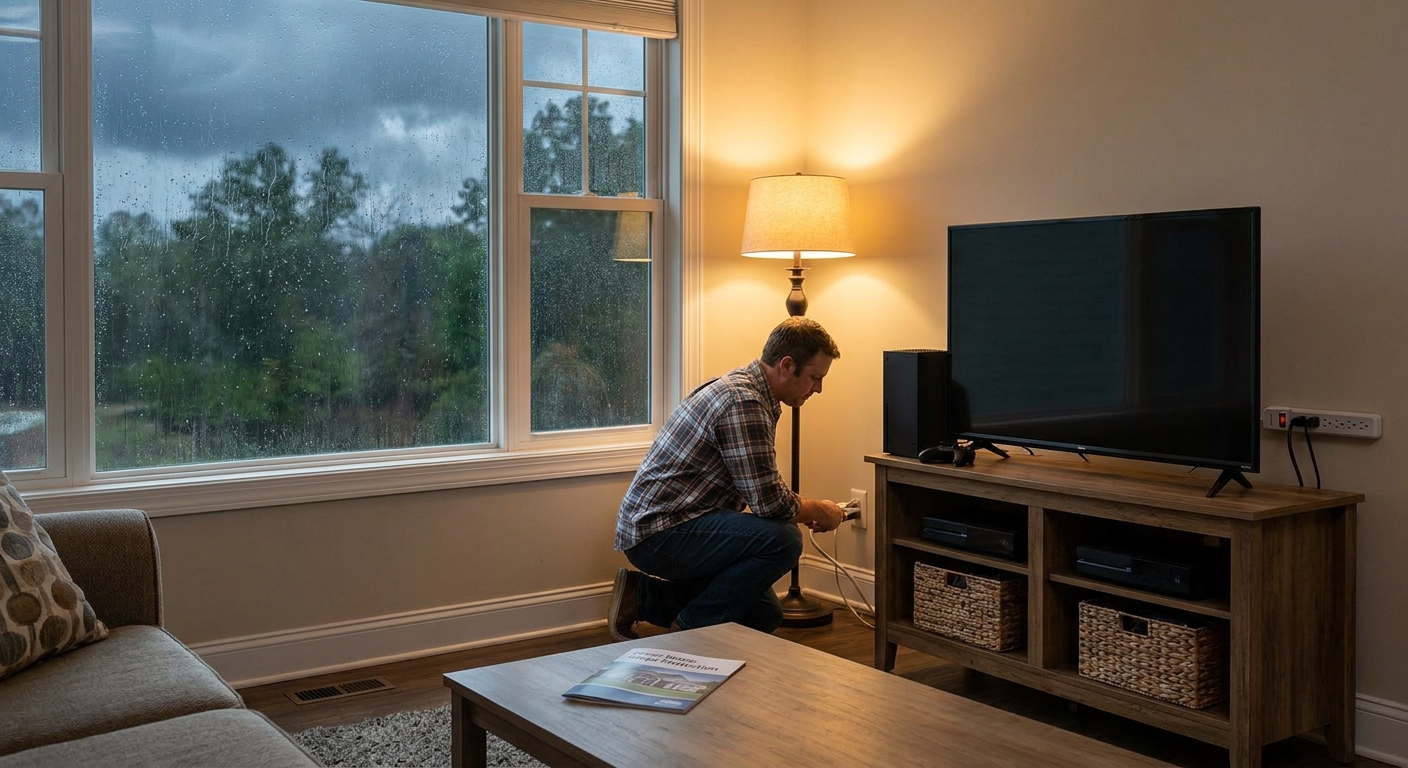
Protecting your electrical system isn't paranoia. It's basic maintenance. The grid fluctuates. Storms roll through. Appliances cycle on and off all day, every day. And every time voltage spikes, something in your house takes the hit. The question isn't whether surges happen — it's whether you're ready when they do.
Voltage Spikes Don't Play Fair
A surge is exactly what it sounds like — a sudden jolt of electricity that blows past the normal voltage your home is designed to handle. It lasts milliseconds, but that's all it takes to fry a circuit board or scramble sensitive electronics. Lightning gets the headlines, but most surges come from mundane sources. A transformer blows. The power company switches grids. Your neighbor's AC unit kicks on. Even your own appliances can trigger internal surges that ripple through your wiring.
And here's the thing — you won't always see the damage right away. Some surges kill instantly. Others chip away at components over time, degrading performance until something finally gives out. Either way, you're left holding the bill.
Greer Gets Hit More Than You Think
South Carolina isn't exactly known for calm, predictable weather. Thunderstorms light up the sky from spring through fall, and every strike within miles of your home can send voltage racing through the power lines. Even if lightning doesn't hit your roof, it doesn't need to. A strike half a mile away can still surge through the grid and into your house.
Beyond weather, the local infrastructure isn't bulletproof. Power outages happen. Lines go down. When the grid flickers or comes back online, voltage doesn't always return smoothly. Those transitional moments are prime time for surges, and most homeowners never see them coming.
What Gets Damaged When Protection Isn't There
Anything plugged into an outlet is at risk. Computers. Televisions. Gaming systems. Smart thermostats. Even your washer, dryer, and refrigerator have circuit boards that can't handle unexpected voltage. A single strong surge can wipe out thousands of dollars in equipment in seconds. Smaller surges do their damage slowly, shortening lifespans and causing mysterious failures that seem random but aren't.
Then there's the data. Photos. Work files. Tax records. If your hard drive gets fried, recovery isn't guaranteed — and it's expensive when it's even possible. The cost isn't just financial. It's time, frustration, and the realization that one preventable event just unraveled your digital life.
Two Layers of Defense
You've got options, and the smart move is using both. Here's how protection stacks up:
- Point-of-use surge protectors sit between your devices and the wall outlet, absorbing spikes before they reach your equipment
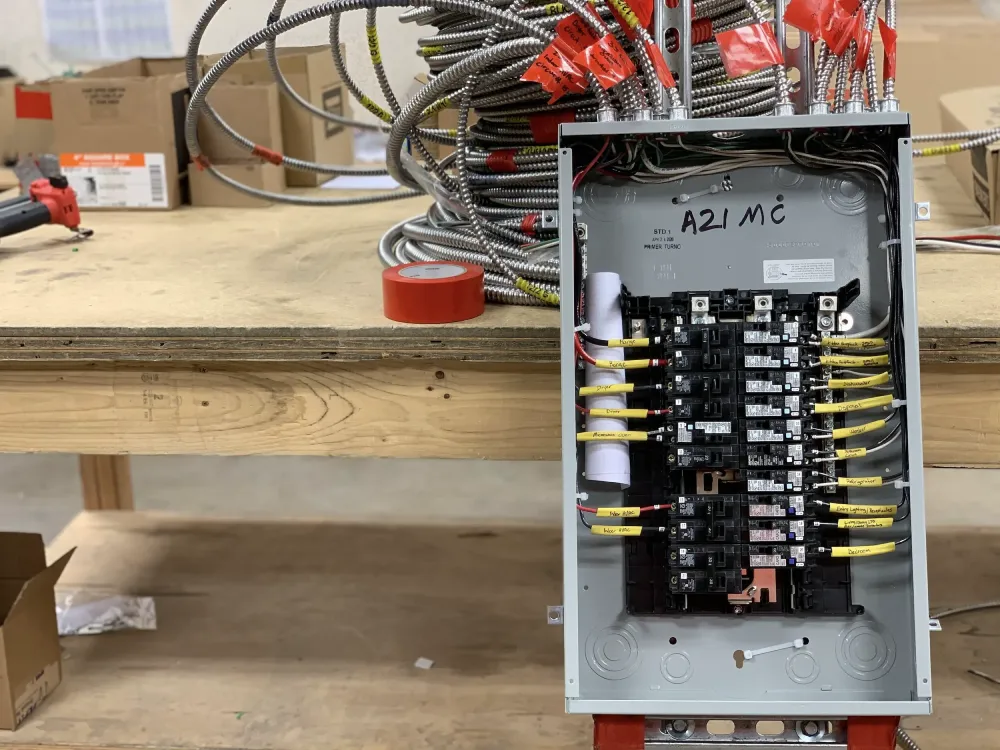
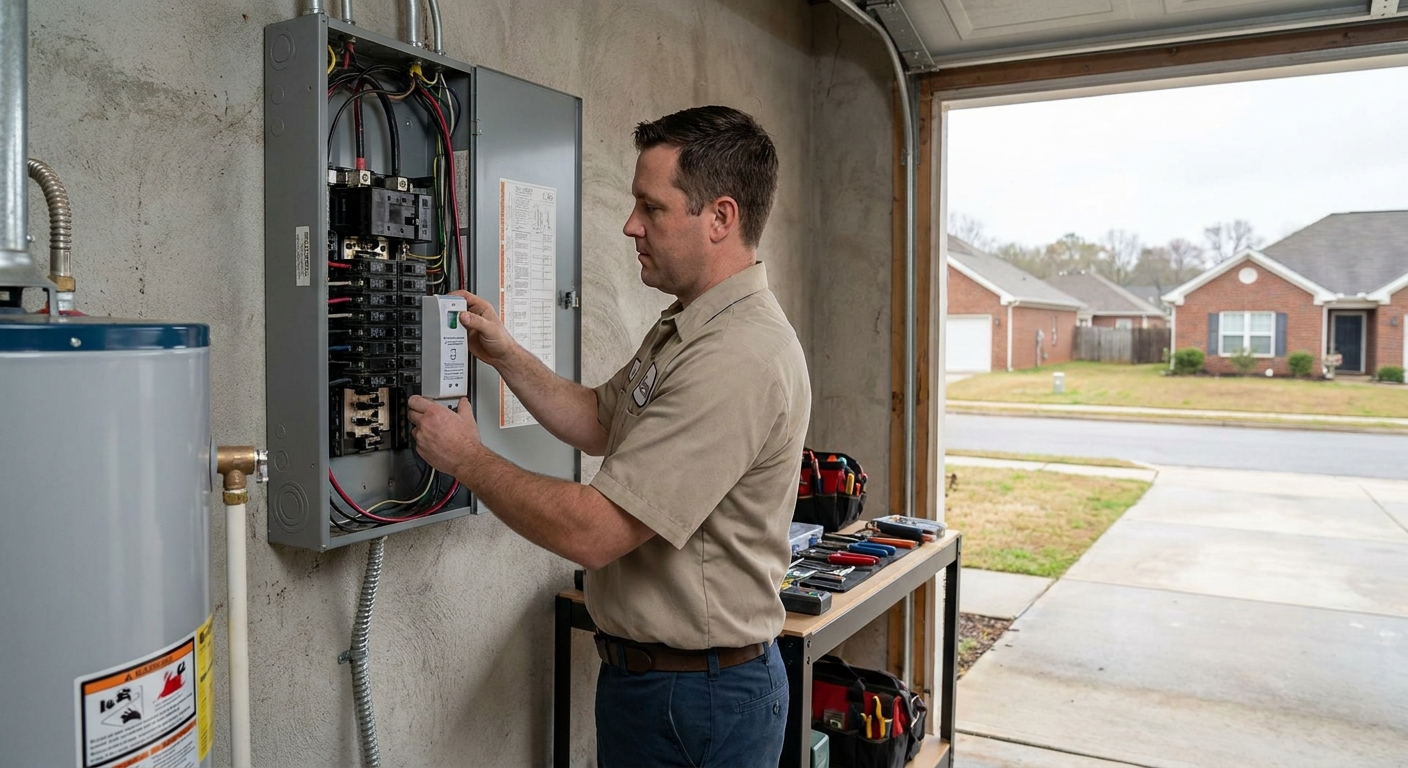
- Whole-house surge protectors install at your electrical panel and stop surges before they enter your wiring
- Point-of-use devices are cheap and easy to deploy, but they only protect what's plugged into them
- Whole-house systems cover everything — lights, appliances, hardwired devices — and handle bigger surges than a power strip ever could
- Neither option is foolproof alone, but together they create a defense system that actually works
Greer Homes Should Be Covered
If you've invested in smart home tech, home entertainment systems, or modern appliances with digital controls, you're already sitting on thousands of dollars in vulnerable equipment. Even if your setup is basic, replacing a refrigerator or furnace control board isn't cheap. And most insurance policies don't cover surge damage unless you've got specific riders in place — which most people don't.
The math is simple. A whole-house surge protector costs a few hundred dollars to install. A single fried HVAC system can run five times that. One storm, one grid hiccup, one unlucky moment, and you're out more than the protection would've cost in the first place.
Where Homeowners Drop the Ball
Assuming a power strip is enough protection is mistake number one. Not all surge protectors are created equal, and plenty of cheap models offer little more than extra outlets. You need devices with proper joule ratings and UL certification — not the $10 specials from the bargain bin.
Skipping whole-house protection because "it hasn't happened yet" is mistake number two. Surges don't wait for you to be ready. They happen, they do damage, and by the time you notice, it's too late to go back and install what you should've had all along.
Setting Up Real Protection
Start by figuring out what you're defending. Walk through your home and count the devices that would hurt to replace. Then decide whether you want to protect everything or just the essentials. For full coverage, bring in a licensed electrician to install a whole-house surge protector at your main panel. It's a straightforward job, and the peace of mind lasts for years.
For your highest-value electronics, add point-of-use protectors with enough capacity to handle the equipment. Look for units rated at 1,000 joules or higher, and make sure they're certified. Avoid cheap knockoffs that promise the world but deliver nothing when voltage spikes.
Steps to Get It Right
- Hire a qualified electrician in Greer to assess your panel and install a whole-house surge protector
- Choose point-of-use protectors with UL certification and adequate joule ratings for your devices
- Replace surge protectors every few years, as their effectiveness degrades over time
- Don't plug surge protectors into each other — it voids warranties and creates fire hazards
- Keep records of what's protected and when equipment was installed, in case you ever need to file a claim
When to Call Someone Who Knows Better
If you're unsure where to start or whether your current setup is enough, don't guess. A licensed electrician can evaluate your home's wiring, recommend the right level of protection, and install everything properly. Cutting corners on installation or buying the wrong equipment defeats the purpose entirely.
Professionals also know how to integrate surge protection with your existing electrical panel without creating new problems. They'll make sure everything is grounded correctly, that your panel can handle the load, and that you're not left with a false sense of security.
Protection That Actually Holds Up
Waiting for disaster to strike before you take action is how homeowners end up with regrets and repair bills. Surges happen in Greer. They happen everywhere. And the homes that come through unscathed are the ones that prepared before the power flickered, not after.
If you're experiencing flickering lights when appliances start or dealing with storm damage repair needs, now is the time to upgrade your protection. We help homeowners throughout our service areas install the equipment and infrastructure they need to operate without fear. Don't wait for the next storm to prove us right. Get covered now, while everything still works.
Let's Safeguard Your Home Together
We know how important it is to keep your home and everything in it protected from unexpected power surges. Let’s make sure your electronics, appliances, and peace of mind are secure before the next storm rolls through Greer. If you’re ready to take the next step, give us a call at 864 300-4737 or contact us for an estimate and let’s get your home set up with real surge protection.
‹ Back